![EduMe_primary_full_colour_light_bg_RGB.svg]](https://help.edume.com/hubfs/EduMe_primary_full_colour_light_bg_RGB.svg)
In this article
Team Management
When your Beekeeper integration is connected, all Beekeeper groups are automatically provisioned in eduMe as Smart Teams. This process happens instantly at setup and continues to run in the background, keeping your teams and users in sync.
How provisioning works
Once the integration is live:
- Each Beekeeper group is created as an eduMe Smart Team.
- New users added to a Beekeeper group are automatically added to the corresponding Smart Team in eduMe.
- Provisioning updates run regularly - every 4 hours - so any changes in Beekeeper are reflected in eduMe.
This allows you to begin distributing training immediately, without needing to manually build teams in eduMe.
Using Smart Teams for dynamic content delivery
Each Beekeeper group is also added to the user profile in eduMe as a tag. These tags give you flexibility to create more complex Smart Team rules.
You can:
- Use tags independently to define new Smart Teams.
- Combine multiple tags, including custom tags
- Mix tags with event-based rules for richer segmentation.
This is useful when you want to deliver training to groups that do not map directly to Beekeeper groups - for example, combining “Drivers” + “Night Shift” to target a more specific audience.
With Smart Teams, you can also enable automatic and personalised training workflows:
- Deliver training automatically: New users receive assigned training as soon as they are added to a Smart Team.
- Push mandatory training to the forefront: Due dates adjust dynamically based on the date a user joins a team.
- Monitor training progress with Performance Dashboard: Use Smart Team tags to identify direct reports and give line managers instant visibility into their team’s progress
This ensures each user receives the right training at the right time, contextual to their joining dates, without manual admin work.
Need help building Smart Teams?
For more guidance on creating Smart Teams and using tags effectively, see our full guide below:
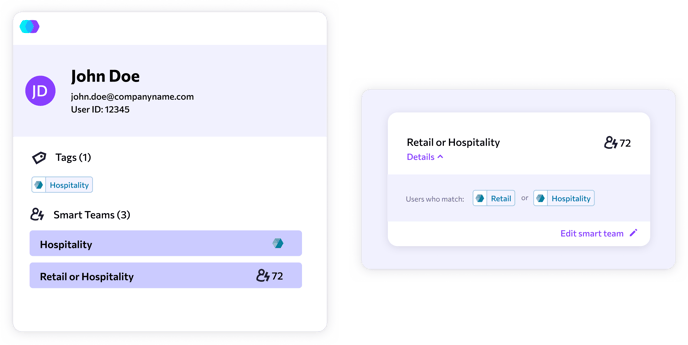
Example Use Cases for Smart Teams
Here are some scenarios where creating Smart Teams would be beneficial:
-
Targeted Upskilling:
You want to deliver specific upskilling training to employees in the Beekeeper "Supervisors" group who have completed a management course.
-
Onboarding Follow-Up:
Create a Smart Team that includes users from the Beekeeper "New Hires" group who have completed their onboarding course.
Provisioning + Data Sync
Once you’ve completed setting up Step 1 + Step 2 on the eduMe side, provisioning starts automatically, syncing user and group data between Beekeeper and eduMe.
1. After the Integration Is Set Up
As soon as Step 1 is completed in eduMe, the following occurs:
- Teams (Beekeeper groups):
- All existing Beekeeper groups are instantly created as teams in eduMe. Once the page is refreshed, these teams will be visible in the People - Teams tab in eduMe.
- Users and Assignments:
- All existing Beekeeper users are added to eduMe within the next 24 hours and are assigned to the correct teams based on their group memberships.
2. Ongoing Provisioning
After the initial setup, data between Beekeeper and eduMe continues to be synced:
-
Teams:
-
Group changes in Beekeeper are reflected instantly in eduMe. This includes creating new groups, or renaming existing groups in Beekeeper.
-
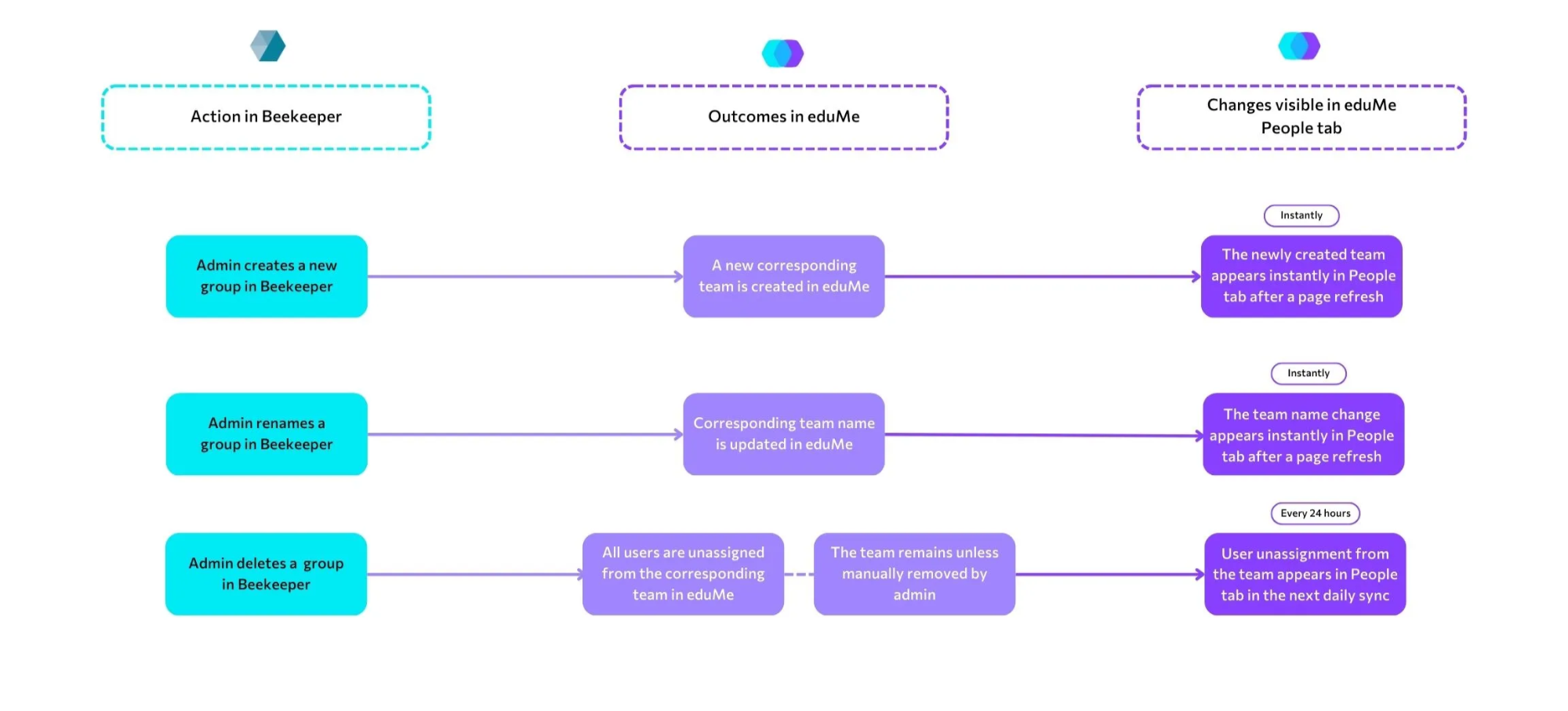 (click on the image to open in a new tab)
-
Users and Assignments:
- Users are synchronised every 24 hours. During this sync, eduMe updates:
- New Users: Automatically added to eduMe and assigned to the correct teams.
- Updated User Information: Any changes to user details are synchronised.
- Group Membership Changes: Users are assigned or unassigned from teams based on their current group memberships in Beekeeper.
- Users are synchronised every 24 hours. During this sync, eduMe updates:
-
Suspended and Deleted Users:
To ensure data integrity and provide flexibility, eduMe does not automatically delete users when they are suspended or deleted in Beekeeper. This allows admins to retain user records along with their learning and completion data or remove them manually. This approach prevents unintended data loss and ensures compliance with data retention.
- Suspended Users:
- Suspended users in Beekeeper are unassigned from all teams in eduMe during the next daily sync.
- Their account remains in eduMe but they lose access to assigned courses.
- Deleted Users:
- Deleted users in Beekeeper are not unassigned from teams in eduMe.
- Their account remains in eduMe but they lose access to their Beekeeper account and can no longer see any training.
- Suspended Users:
*View the Summary Flow Chart for a visualised representation

3. What Data Is Synchronised
The following user data is synchronised from Beekeeper to eduMe:
- First Name
- Last Name
- Beekeeper Employee ID
- Phone Number
- Email Address
- Active / Suspended Status
This ensures that user profiles in eduMe are always up-to-date with the latest information from Beekeeper.
Summary flow chart of Team Management + Provisioning
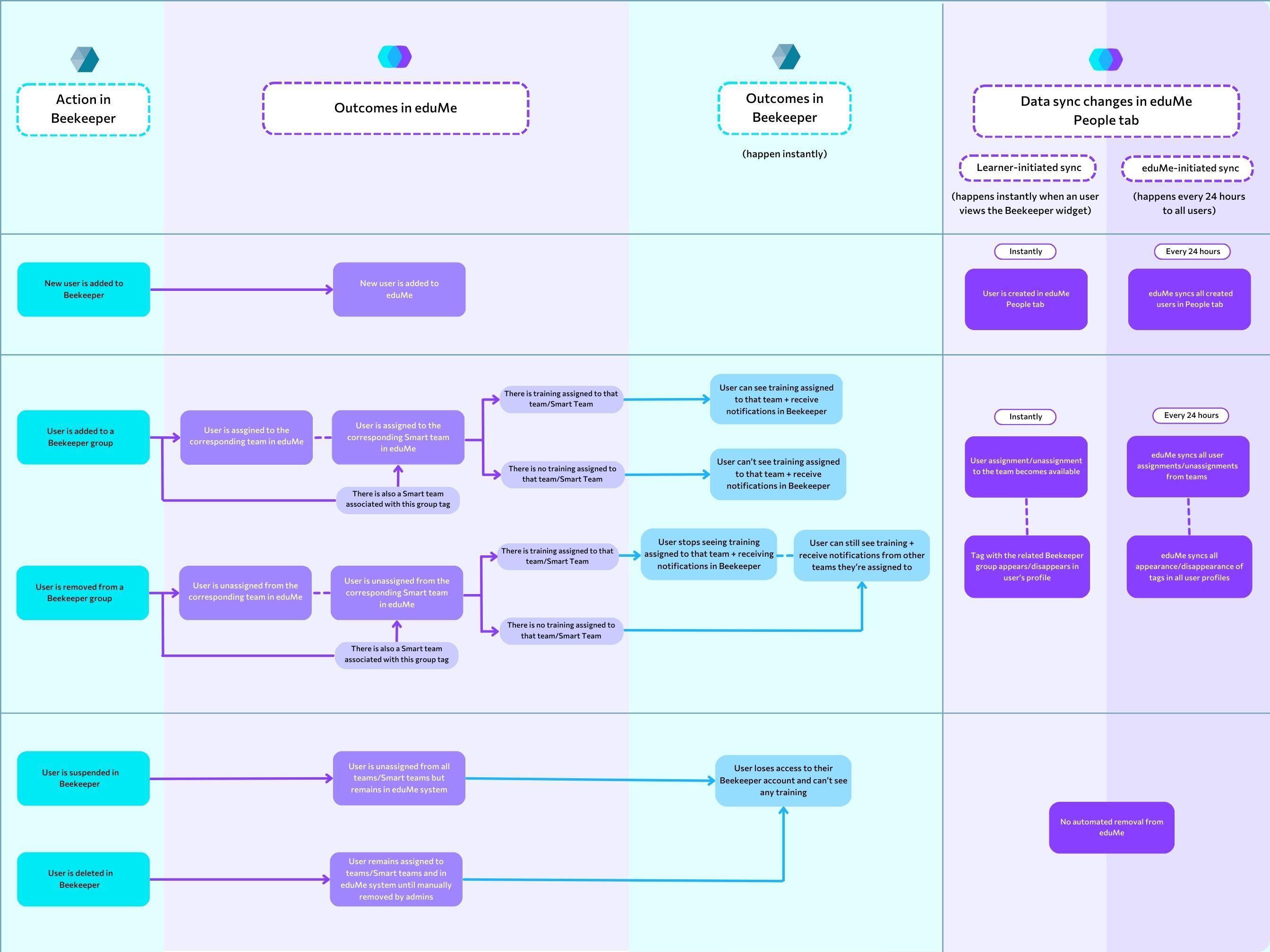 (click on the image to open in a new tab)